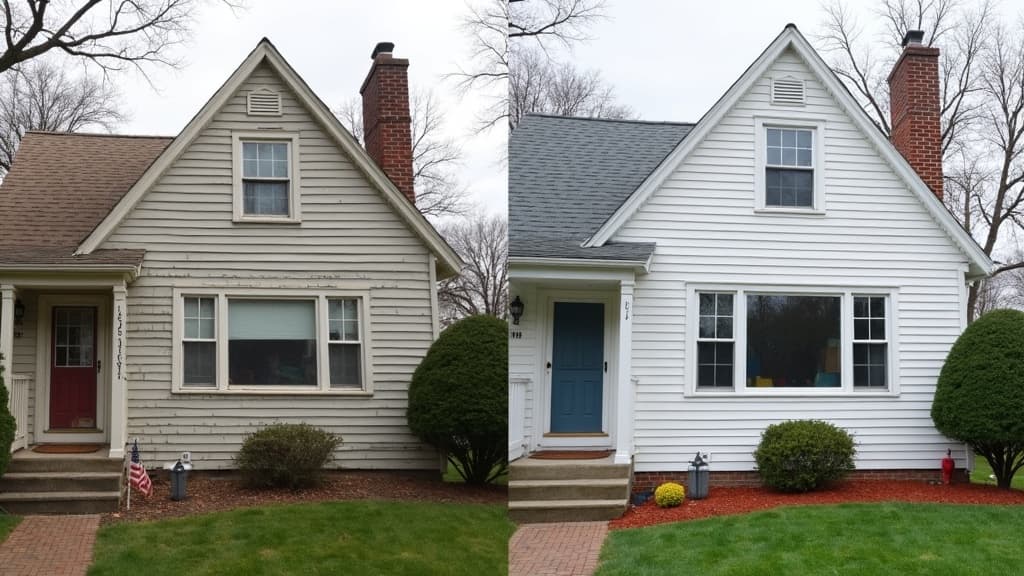
James Hardie Siding Cost on Long Island — The Short Answer
James Hardie fiber cement siding installed on Long Island in 2026 runs $9–$17.50 per square foot depending on product, finish, and complexity. For a typical 2,000 sq ft Long Island colonial — the most common home size — that means a total project cost of $18,000–$35,000 for a full reside with tear-off of old siding, house wrap, HardiePlank, Hardie trim, and ColorPlus factory finish.
That is a real number, not a low-ball marketing estimate. James Hardie installation on Long Island is skilled labor — the panels are heavier than vinyl, require a fiber-cement-rated saw blade, and must be installed by a James Hardie contractor to carry the manufacturer warranty. Labor is the largest driver of cost variation between quotes.
James Hardie Siding Price Per Square Foot — Long Island 2026
Installed pricing by Hardie product for Long Island homes in 2026:
| Product | Primed (Field Paint) | ColorPlus Factory Finish | Best For |
|---|---|---|---|
| HardiePlank 6" lap | $9.00–$11.50/sf | $11.00–$14.00/sf | Most LI colonials, ranches |
| HardiePlank 7.25" lap | $9.50–$12.50/sf | $11.50–$14.50/sf | Traditional look, wider reveal |
| HardieShingle (shake) | $12.00–$15.50/sf | $14.50–$18.00/sf | Accents, gables, North Shore |
| HardiePanel (vertical) | $10.00–$13.00/sf | $12.00–$15.50/sf | Modern homes, board & batten |
| HardieTrim (boards) | $11.00–$14.00/sf | $13.50–$17.00/sf | Corner boards, window surrounds |
All prices are installed, inclusive of material, labor, house wrap, fasteners, and caulk. Permit fee is separate ($200–$600 depending on the town). Tear-off of old siding adds $0.75–$2.00/sf.
James Hardie Siding Cost by Home Size — Long Island
Typical installed project costs for Long Island homes by size, using HardiePlank ColorPlus as the basis:
| Home Type | Sq Ft (Siding Area) | HardiePlank ColorPlus | + HardieShingle Accents |
|---|---|---|---|
| Ranch (1,000–1,400 sf) | 900–1,200 sf siding | $12,000–$22,000 | $14,000–$28,000 |
| Cape Cod (1,400–1,800 sf) | 1,100–1,600 sf siding | $14,000–$28,000 | $16,000–$35,000 |
| Colonial (1,800–2,400 sf) | 1,400–2,000 sf siding | $18,000–$35,000 | $22,000–$42,000 |
| Large Colonial / Center Hall (2,400–3,200 sf) | 1,800–2,600 sf siding | $24,000–$45,000 | $28,000–$55,000 |
Nassau County vs. Suffolk County — Is There a Price Difference?
Yes. Labor rates in Nassau County run 8–12% higherthan Suffolk County on average. A $20,000 HardiePlank reside quoted in West Islip (Suffolk) might be $21,600–$22,400 for the same scope in Manhasset or Garden City (Nassau). Material costs are identical — both counties draw from the same Long Island distribution suppliers. The difference is purely labor rates, which reflect Nassau County's higher cost of living, higher contractor insurance rates, and tighter labor market for skilled installation crews.
This does not mean you should hire a Suffolk County contractor to do Nassau work to save money — Long Island traffic and drive time eat the labor savings quickly. It is a factor to understand when comparing quotes from contractors based in different counties.
ColorPlus vs. Primed — Which Should You Choose on Long Island?
James Hardie sells HardiePlank and HardieShingle in two forms: primed-only (raw gray primer, field-painted after installation) and ColorPlus (factory-applied multi-coat baked finish in one of approximately 30 colors).
The ColorPlus premium is $1.50–$3.00 per square foot installed. For a 2,000 sf colonial that's $2,100–$4,200 more upfront. In return, you get a 15-year warranty against chipping, peeling, and fading — versus a field-painted Hardie that requires repainting every 7–12 years. On Long Island, where a full exterior repaint costs $4,000–$9,000, ColorPlus almost always pencils out over a 15-year horizon. The exception is when you want a specific custom color not available in the ColorPlus palette — at that point, primed + premium exterior paint is the only path.
Our recommendation for Long Island homes: ColorPlus for the field (lap siding area), primed for trim boards that are cut on-site and hard to factory-finish precisely. This hybrid approach gets you the long-term maintenance benefit on the highest-square-footage portion of the job while maintaining flexibility on trim dimensions.
What Drives Cost Variation Between Hardie Quotes on Long Island
When you get three James Hardie quotes and they span $8,000 or more, here is what is driving the gap:
- Tear-off scope — Is the existing siding being removed, or is the Hardie going over it? Installing over existing siding saves labor but adds weight to the structure, can trap moisture, and may violate Nassau/Suffolk County building code depending on the original material and number of layers.
- House wrap specification — A proper Hardie installation requires a continuous WRB (weather-resistant barrier), typically Tyvek HomeWrap or equivalent. Some contractors skip this or use inadequate tape on seams. It is a real cost difference and a real long-term performance difference.
- Hardie contractor certification — Only James Hardie Preferred Contractors can offer the extended 30-year non-prorated warranty that covers both product and labor. Installers who are not certified can still buy the material but cannot extend the full warranty to you.
- Trim scope — Corner boards, window surrounds, frieze boards, band boards, and rake boards are all sold separately from the field siding and add meaningful cost. A quote that includes all trim versus one that excludes it can differ by $3,000–$8,000 on the same house.
- Access equipment — Multi-story colonials require scaffolding or a boom lift. Scaffold rental on Long Island typically runs $800–$2,500 depending on the scope.
Is James Hardie Worth It on Long Island vs. Vinyl?
The honest answer is: it depends on where your home is.
For Long Island homes within one mile of saltwater — the South Shore from Lido Beach to Mastic Beach, the North Shore from Port Washington to Bayville, or any of the barrier island communities — Hardie is worth the premium. Salt air, UV, and coastal storm events accelerate vinyl degradation measurably. Hardie is non-porous, non-combustible, and warranted for 30 years against the specific conditions that shorten vinyl lifespans on the coast.
For inland Nassau and Suffolk County homes more than a mile from the water — Levittown, Elmont, Hicksville, Hauppauge, Medford — the decision is genuinely close. High-end vinyl like CertainTeed Monogram or Mastic Ultra Premium with a 40-year warranty is a credible competitor at $8,000–$14,000 for the same home Hardie would be $18,000–$35,000. If budget is constrained, vinyl is not a bad choice. If you are staying in the house for 15+ years and want the durability and fire-resistance performance, Hardie justifies its premium.
Frequently Asked Questions
How much does James Hardie siding cost per square foot on Long Island?
James Hardie fiber cement siding installed on Long Island typically runs $9–$17.50 per square foot depending on product, finish (ColorPlus vs primed), and whether the existing siding needs tear-off. HardiePlank lap siding — the most common product — typically runs $9–$13/sf installed. HardieShingle typically runs $12–$18/sf. ColorPlus factory-finish adds $1.50–$3.00/sf versus primed-only.
What is the total cost to reside a Long Island home with James Hardie?
A 2,000 sq ft Long Island colonial typically runs $18,000–$35,000 for a full James Hardie reside including tear-off of old siding, house wrap, HardiePlank, Hardie trim, ColorPlus finish, and permit. A 1,500 sf ranch typically runs $14,000–$26,000. A 2,800 sf two-story colonial with significant trim detail typically runs $28,000–$50,000.
Is James Hardie worth the cost on Long Island vs vinyl siding?
For Long Island homes within a mile of the water (South Shore bays, North Shore Sound, ocean-front), Hardie is almost always worth the premium — salt air, UV, and coastal wind events accelerate vinyl degradation. For inland Nassau and Suffolk County homes, the decision is closer. Hardie's 30-year non-prorated warranty and non-combustible material do justify the $10,000–$20,000 premium over vinyl for many homeowners who plan to stay in the house long-term.
What is ColorPlus finish and is it worth it on Long Island?
James Hardie ColorPlus is a factory-applied multi-coat baked finish — not field-painted. The ColorPlus warranty covers chipping, peeling, and cracking for 15 years. On Long Island, where painter labor typically runs $40–$65/hour and a full exterior repaint costs $4,000–$9,000, the ColorPlus premium of $1.50–$3.00/sf typically pays for itself by pushing the first repaint to year 15 or beyond versus year 7–10 for field-painted fiber cement.
Does James Hardie siding require a Nassau or Suffolk County permit?
Yes. A full re-siding project in Nassau County (Town of Hempstead, Town of Oyster Bay, Town of North Hempstead) and Suffolk County requires a building permit. Permit applications require contractor license, homeowner identification, and project scope. Permit fees typically run $200–$600 depending on the town. We handle all permit applications — you do not interact with the permit office.
How long does James Hardie installation take on Long Island?
A standard 2,000 sq ft Long Island colonial with HardiePlank and Hardie trim takes 7–12 business days for a two-person crew. Larger homes with HardieShingle accents or complex trim profiles take longer. Tear-off of original aluminum or vinyl siding adds 1–2 days. We do not start until all materials are on-site and the permit is approved.
What James Hardie products are available for Long Island homes?
The most common Hardie products for Long Island homes: HardiePlank lap siding (the standard — comes in 5/16" thickness, 6" or 7" exposure), HardieShingle (for shake or shingle-look accents, popular on North Shore and Hamptons-adjacent homes), HardieSoffit (for soffits replacing rotted wood or aluminum), and HardieTrim (boards, batten, corner boards). All are rated for the HZ5 Climate Zone that covers New York.
What drives the cost difference in James Hardie quotes on Long Island?
Four main drivers: (1) Product choice — HardiePlank vs HardieShingle vs HardiePanel, and finish level (ColorPlus vs primed). (2) Tear-off — does existing siding need removal? Old wood clapboard or double-layer siding adds time and disposal cost. (3) Trim complexity — detailed corner boards, frieze boards, window surrounds, and band boards add labor. (4) Access — multi-story homes require scaffolding or boom lift rental. Labor rates in Nassau County run 8–12% above Suffolk County on average.